

AI just stole your search traffic, what are you going to do about it?
If I asked you to plan your next holiday right now, where would you start? A few years ago, I’d put good money that your answer was Google.
You’d start by researching the destination, narrow it down with a few tabs for accommodation, a few more tabs covering things to see and do, a few more tabs for restaurants … and then, maybe 15-20 tabs deep into your research, you might move from looker to booker.
Today? There’s a growing chance you’d open ChatGPT, Gemini, Perplexity or another AI tool and simply tell it what you want out of your holiday.
Not where you want to go – what you want. And in deeply specific terms..
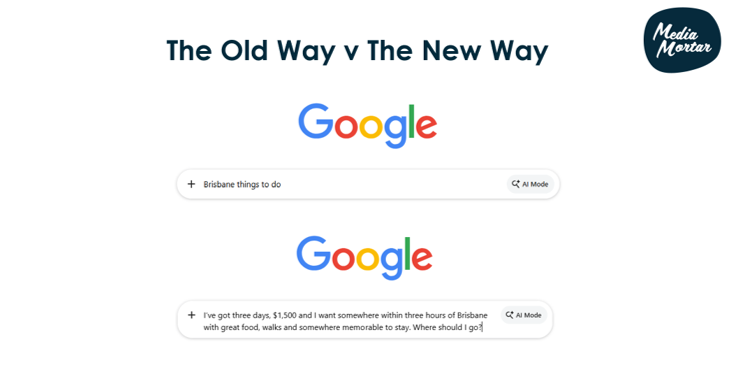
This seemingly small change has enormous implications for destination marketing – and it’s what I’m covering over six weeks with Australian Regional Tourism’s inaugural AI Destination Marketing Lab program.
The timing of the course is critically important because AI isn’t just changing destination marketing – it’s already fundamentally changed how travellers dream, research, choose, book and experience a destination.
Destinations who don’t adapt will risk being invisible in the biggest shift that’s happened to destination marketing since the invention of the internet. Please, don’t let that be you.
How has the customer funnel changed with the rise of AI search?
Put simply, your customer has moved from 15 tabs to one conversation.
The traditional traveller journey looked something like this:
Inspiration → Google → Destination website → 15 tabs → Compare → Book.
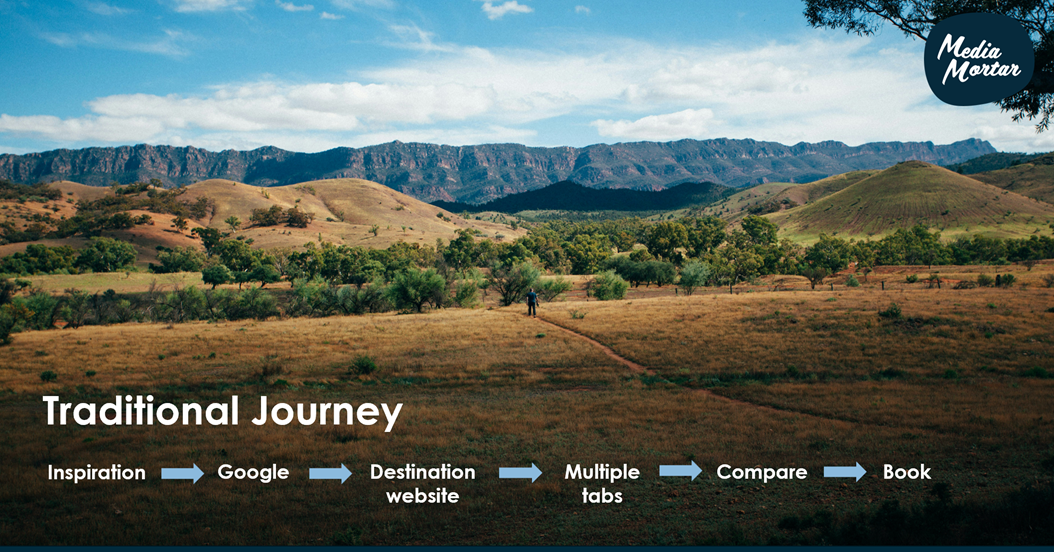
As marketers, we liked this journey because we could see it. The customer, whether they knew it or not, was leaving little breadcrumbs of information everywhere they went, which meant they could be marketed to, re-marketed to, and pushed further down the funnel to conversion.
The emerging traveller journey looks more like:
Inspiration → Ask AI → Refine preferences → Receive a shortlist → Compare fewer options → Book.
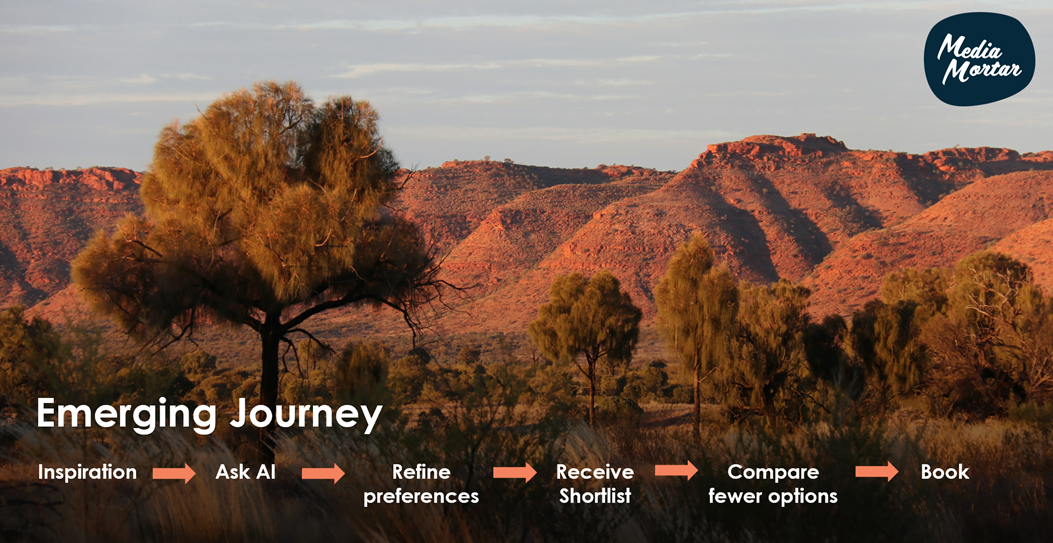
The emerging journey is far less clear for destination marketers looking to influence where a customer’s money goes and annual leave flows.
What’s the biggest shift to the customer journey because of AI?
The biggest shift is the fact the traveller doesn’t need to know where they want to go before they begin their search. Where previously a customer needed to know your destination (giving real cause for brand marketing and awareness metrics), more often now, a customer will ask for what they want – and that doesn’t require any knowledge of you.

Within seconds, AI can give them three destinations to consider.
For tourism marketers, this changes your competition completely. You’re no longer competing with your regular competitor set – you’re competing with the world. More than this, if AI serves the searching traveller three destinations and yours isn’t one of them – they might never Google you – and your destination is lost from that point on in the chat.
How is AI changing the dream stage?
Traditionally, travel inspiration was relatively passive. We’d see a beautiful image, an ad, an article, a Reel or hear a recommendation from a friend and think: I want to go there. AI however makes inspiration active. Travellers can now ask to be inspired based on who they are, rather than starting with a destination. Put simply, it’s far less about you and more about the customer.
Your potential customers are telling AI:
- Who they’re travelling with
- How much time they have
- How far they’re willing to travel
- What they enjoy
- What they want to avoid
- Their budget
- The time of year
- The kind of holiday they feel like having
The answers are understandably incredibly personalised and fit for purpose.
For regional destinations, there’s a significant opportunity here – you can enter someone’s consideration set before they’ve ever heard of your destination. How great that you can influence a person’s decision without them even knowing your name.
There is a catch though: you can only do this if AI understands what you offer and who it’s right for.
How do you stand out to AI to inspire the dreaming phase?
Specificity in your website and social media copy is your new superpower. Generic tourism copy makes your destination invisible. Take for example – “Come and explore our beautiful region.” This doesn’t tell a traveller or a machine anything.
AI needs specifics:
- Where are you?
- Who are you for?
- What can someone actually do?
- How long should they stay?
- What makes the experience worth travelling for?
- What other experiences can it logically be combined with?
- Why should someone choose you over somewhere else?
For years, tourism marketing has had a bad habit of reaching for adjectives when we should be reaching for details. AI just gave us another reason to stop telling and start showing why visitors need you.
Pssst – if you haven’t already, now is THE time to invest in your tone of voice document to ensure you stand out. Let’s talk about it if you need help – hello@mediamortar.com.au
How has AI changed the traveller research stage?
Once a traveller has chosen a destination, AI doesn’t politely bow out of the customer journey. It gets even more useful and even more filtered. Previously, travellers searched, opened multiple tabs, compared websites, checked reviews and pieced their trip together themselves.
Now, they can ask AI to do the first round of research and keep refining it. This is a big shift from Google Search being used for information gathering and now AI being used for decision support. Travellers aren’t only asking, “What can I do?”. They’re asking, “What should I do, and in what order?”
How has AI changed the booking phase?
Instead of arriving at the booking stage with ten tabs open and five options in play, a traveller might now arrive with two. This shift makes earning a place on the shortlist from the very first query even more important.
For now, your website still needs to close the sale but that’s fast becoming unnecessary too. AI agents are increasingly moving towards searching live inventory, comparing options, interacting with booking systems and completing transactions.
We’re moving towards a world where the prompt isn’t: “Where should I stay?” but “Find the best place for us, check availability and book it.” This change will effectively see customers bypass your website all together.
I’ll say it now louder, for those in the back – the content on your website is your last and only line of defence to becoming invisible in an AI-powered world!
How has AI changed the experiencing phase?
Where Google was helpful before you travelled, AI can act like a real-time travel companion. This means the itinerary no longer needs to be fixed before the trip begins, which is an opportunity for your destination to influence the traveller during their time on the ground.
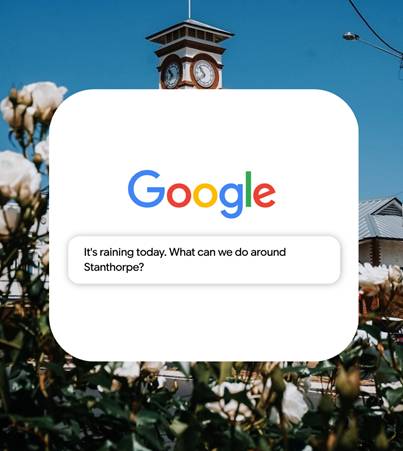
We know plans can change based on:
- Weather
- Opening hours
- Energy levels
- Location
- Unexpected closures
- How much time is available
- What travellers have already enjoyed
- Who they’re travelling with
AI allows the trip to become responsive, rather than pre-programmed. This is a huge opportunity for content to do the heavy lifting with selecting experiences and encourage dispersal.
How has AI changed the sharing stage of the customer journey?
AI is even changing what happens after the trip throughout the sharing phase of the customer journey. Not everyone considers themselves a writer, photographer or content creator. AI lowers that barrier.
AI can help travellers turn their photos, notes and memories into captions, reviews, trip summaries, travel tips and itineraries to send to friends. Just like that AI has completed the ecosystem impacting every phase of the travel cycle.
Where do you start with all this information? How do you make your destination shine through AI?
If you’re wondering what to do with all of this, I’d start here – don’t make AI guess. Look at your website through the eyes of someone, or something, that knows absolutely nothing about you.
Can it easily work out:
- Where you are?
- Who the experience is for?
- What someone can actually do?
- How long they need?
- What it costs?
- When you’re open?
- What makes you different?
- What other experiences are nearby?
- Why should someone choose you?
Then start creating content around what travellers are trying to achieve, rather than simply what you think they’re searching for.
Your story still has to give them a reason to choose you.
If you need help telling it, you know where to find a content marketing agency with experience in just that – hello@mediamortar.com.au